
New Mexico’s climate is deceptively demanding on home heating and cooling systems. Albuquerque sits at roughly 5,300 feet above sea level, experiences an average of 300 days of sunshine per year, and swings between summer highs above 95 degrees Fahrenheit and winter nights that regularly dip below freezing. That combination puts year-round stress on HVAC equipment — and neglecting seasonal maintenance is a gamble most homeowners cannot afford to take.
The good news is that most HVAC failures do not happen without warning. There are clear signs that a system is struggling, and catching them early is the difference between a straightforward service call and an emergency replacement in the middle of a July heat wave.
How New Mexico’s Climate Strains HVAC Systems
Desert climates are often thought of as simply “hot,” but Albuquerque’s HVAC demands are more complex. The region’s intense UV exposure degrades outdoor unit components faster than in more temperate climates. Dust storms and high particulate levels clog filters and coils rapidly, reducing efficiency and airflow. And because many Albuquerque homes rely on both heating and cooling heavily — due to cold winters and scorching summers — systems run more total hours per year than in regions with milder shoulder seasons.
Swamp coolers remain common in older Albuquerque homes and add another layer of maintenance consideration. While effective during dry heat, they lose efficiency during the monsoon months when humidity rises. Homeowners with traditional central AC systems face different but equally important upkeep requirements.
Warning Signs Your HVAC System Needs Attention
Understanding what your system is telling you before it fully fails can prevent a costly emergency. Watch for these indicators:
- Unusual noises: Banging, grinding, squealing, or rattling sounds from the air handler or outdoor unit are almost always a sign of a mechanical problem.
- Inconsistent temperatures: If some rooms are significantly warmer or cooler than others, or if the system runs continuously without reaching the set temperature, there may be a refrigerant issue, ductwork leak, or failing compressor.
- Higher utility bills: A sudden increase in energy costs without a change in usage habits is a reliable indicator that the system is working harder than it should.
- Weak or restricted airflow: Reduced airflow from vents can point to a dirty evaporator coil, blocked ducts, or a failing blower motor.
- Frequent cycling: A system that turns on and off in short bursts — known as short cycling — is often a sign of a refrigerant leak or thermostat calibration issue.
- Unusual odors: Musty smells suggest mold in the ductwork or drain pan. A burning smell warrants immediate shutdown and a service call.
Seasonal Maintenance: What Should Happen and When
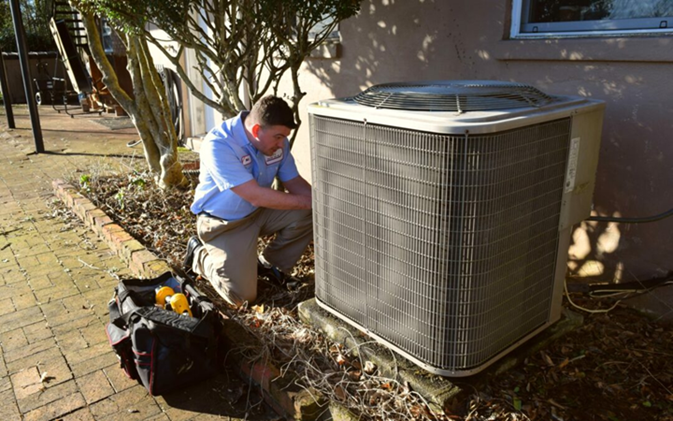
Albuquerque’s distinct seasons make a twice-yearly maintenance schedule a practical standard. Before cooling season, technicians inspect and clean condenser coils, check refrigerant levels, test thermostat calibration, replace filters, and examine electrical connections. For swamp cooler owners, spring startup involves cleaning pads and checking the pump and float valve.
Before heating season, a tune-up covers the heat exchanger (critical for safety — a cracked exchanger can allow carbon monoxide to enter living spaces), burner efficiency, igniter condition, flue integrity, and overall system cycling.
Changing air filters every one to three months is one of the highest-impact things Albuquerque homeowners can do between professional visits. Given the region’s dust levels, monthly filter checks during heavy-use months are well worth the habit.
Repair or Replace: Making the Right Call
Not every HVAC problem calls for full replacement, but some situations make it the more cost-effective choice. A useful guideline is the “5,000 rule”: multiply the system’s age (in years) by the cost of the repair. If the result exceeds $5,000, replacement is usually the better investment. Most central AC systems last 12 to 15 years, while furnaces can run 15 to 20 years with proper maintenance.
Staying Ahead of the Heat
Waiting until a system fails completely is the most expensive way to handle HVAC service. Proactive maintenance, seasonal checkups, and prompt attention to warning signs keep systems running efficiently and protect indoor comfort through New Mexico’s most demanding months.
For homeowners who are unsure where their system stands heading into summer, scheduling a professional inspection is a straightforward way to get clear answers. Experienced providers of HVAC repair Albuquerque understand the specific performance demands that desert altitude and desert climate place on residential equipment — and that local knowledge makes a meaningful difference in the quality and accuracy of service.